case study 03 · brain–computer technologies
Passive BCI for cognitive fatigue recovery
If a headset could tell your brain was tired, would you want it to? A speculative design study with young adults who spend long days in deep screen work.
The question
How can passive BCI interfaces support recovery from cognitive fatigue in prolonged screen-based deep work in young adults?
The gap: little is known about how passive BCI systems should be designed to support recovery in everyday digital work.
Designing a future to react to
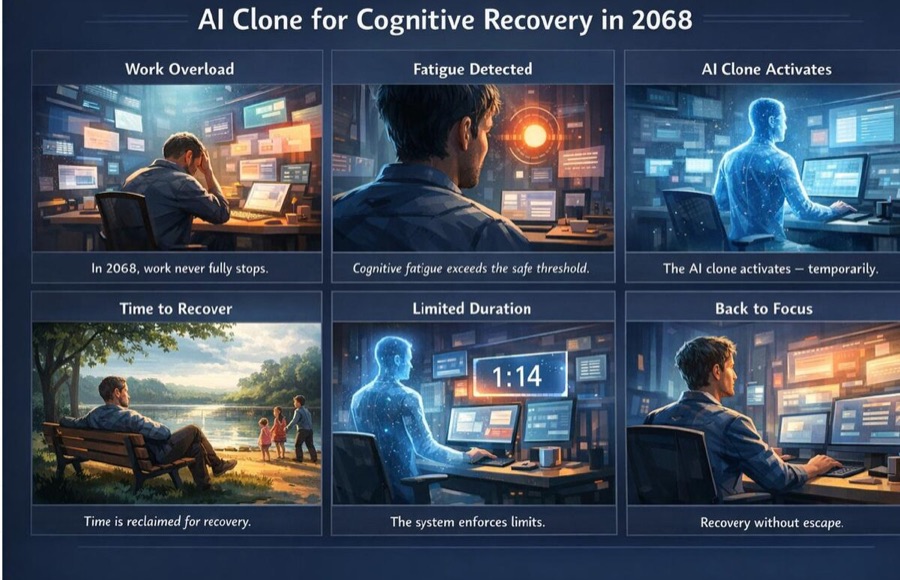
01 provocation
A staged scenario to draw out first, honest reactions.
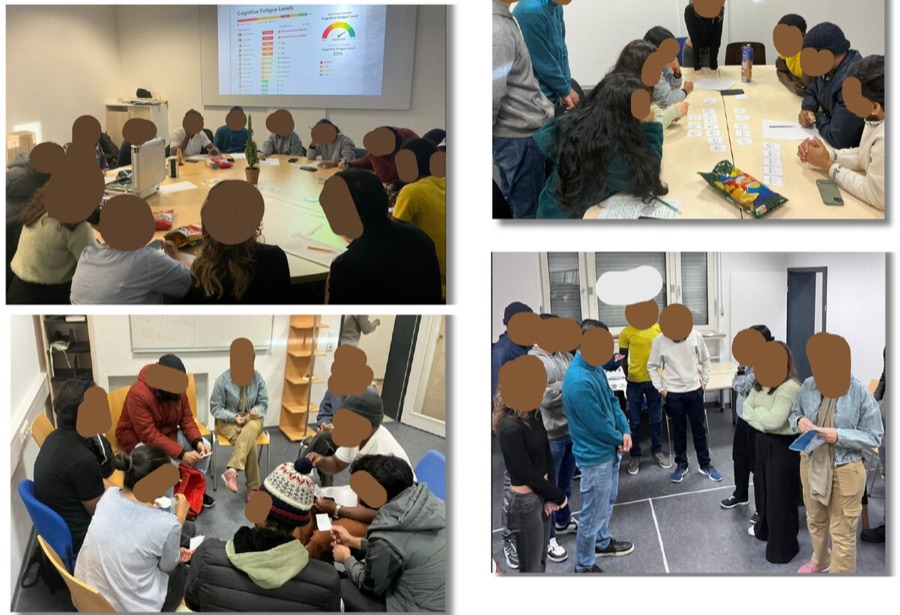
02 co-design
Groups imagined BCI recovery concepts and built artefacts.
03 human barometer
People physically took a stance on statements, then discussed.
04 survey
Individual reflections to confirm or contrast group views.
Five themes
pick one
we found
Participants felt discomfort, positive and negative feelings at once, and often conflicting emotions, in every phase of the workshop.
so design should
Offer emotional safety, not more stress or the feeling of being watched. Use an everyday device and calm, supportive language instead of rankings.
“I feel observed and I felt bad for the people who were not allowed to enter the room. It creates inequality.”
we found
Acceptance depended on how, when and by whom the BCI is used.
so design should
Be transparent about purpose. Make support voluntary and personal, with visible control over data and actions.
“I would accept it when I choose to use it and can turn it off anytime.”
we found
People worried about discrimination, accessibility and whether BCI can serve different cognitive needs, especially for neurodiverse users.
so design should
Design for neurodiversity and accessibility. Suggest flexible recovery, not one correct way.
“Do not disadvantage certain groups or reinforce unrealistic expectations about constant mental performance.”
we found
Privacy was the dominant concern. Fatigue was seen as personal and contextual, and brain data as something to protect strictly.
so design should
Default to non-disclosure. Let people choose when and with whom to share, and give them full ownership of their data.
“Cognitive fatigue is private.”
we found
People wanted support on their own terms and rejected automated decisions about their fatigue.
so design should
Recommend and inform; never enforce unless the person opts in to automatic actions, and say clearly what the device controls.
“BCI to play an advisory and supportive role rather than an autonomous one.”
How minds changed
First reactions at the provocation compared with reflections after the workshop.
Before: “I would rather stay at home than go through this everyday.”
After: “I would accept as long as its role is to take note of fatigue values and possibly recommend an action.”
Before: “A constant reminder about my mental health will make me more stressful.”
After: “Useful when it supports my awareness of fatigue. But not if it's restrictive.”
Conclusion
Passive BCI can support recovery from cognitive fatigue, but only if it feels emotionally and physically safe, keeps the person in control of their data and decisions, and offers support that is personal and optional.